
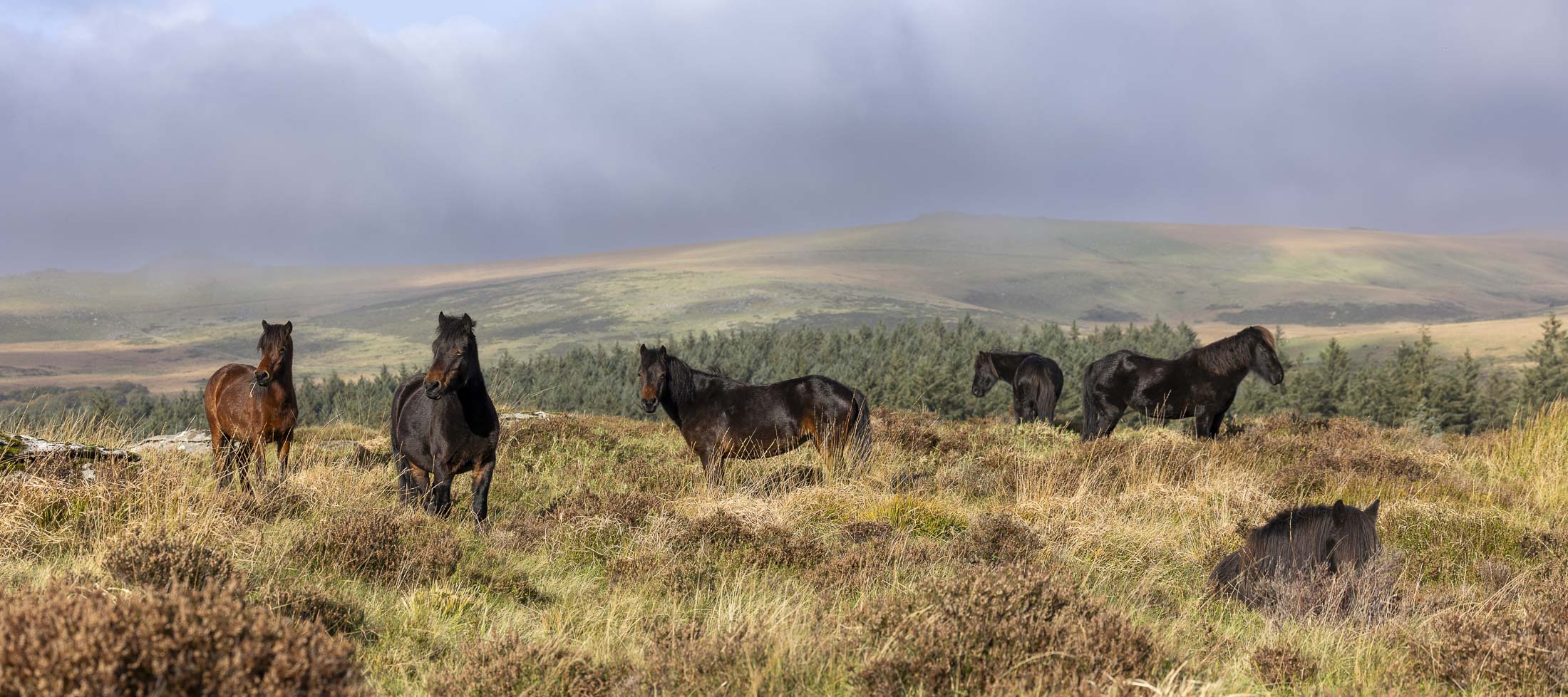
Could you give a Dartmoor pony the right home?
Taking on a feral or semi-handled pony can be incredibly rewarding, but understanding the life they have come from is an important part of giving them the right future.
We’ve teamed up with the British Horse Society (BHS), The Mare and Foal Sanctuary and The HUGS Foundation for a new three-part series this autumn, bringing together practical advice, professional expertise and the chance to understand these ponies in the environment they know best.
The Feral Pony Behaviour and Training series will also bring together vets, farriers, behaviourists and BHS Accredited Professional Coaches to help people understand what it really means to take on a feral or semi-handled pony.
For us, it’s a particularly important collaboration.
There is understandably a great deal of affection for Dartmoor’s ponies, and many people are drawn to the idea of giving a pony from the moor a home. But a pony that has spent its life living within a herd on Dartmoor can have very different experiences and needs from a domestically bred and handled pony.
Understanding those differences before taking a pony home can make an enormous difference to both pony and owner.
It starts on Dartmoor
The first event takes place with us at Bellever on 10 September, where we’ll be hosting a guided ‘Walk and Talk’, giving participants the opportunity to see heritage Dartmoor ponies living within the landscape that has shaped them.
Rather than beginning with how to handle a feral pony, we want to begin by understanding the pony itself.
We’ll look at how ponies behave within a herd, their social structure and interactions, what and how they graze, their natural diet and how they move through and respond to their environment.
We’ll also explore the important role heritage Dartmoor ponies play within the moorland ecosystem through conservation grazing.
Cath Anderson, our head of operations, explains:
“Our guided walk event on Dartmoor is about helping people see heritage ponies as they really are, in the landscape that has shaped them. When you watch a herd moving, grazing and interacting on the moor, you begin to understand what these ponies need to stay healthy, both physically and mentally.
“Dartmoor’s native ponies play a vital role in the moorland ecosystem and in the life of farming communities, so it matters that any move into a domestic home is done thoughtfully.
“By giving people the chance to learn from the ponies in their natural environment, we hope they will go away better prepared to make good decisions about ownership and welfare, and more confident in how they can support the future of these herds on Dartmoor.”
From the moor to a domestic home
The second event will be held at The Mare and Foal Sanctuary’s Coombe Park Equestrian Centre near Totnes on 14 September.
This full-day Feral Pony Preparation Clinic will look at the practicalities of bringing a feral or semi-handled pony into a domestic environment.
Alongside equine behaviour and understanding body language, the day will cover safe facilities and field set-up, initial handling, companionship, feeding, parasite control, hoof care and veterinary planning.
Vet Richard Frost from Tor Equine and farrier Tom Phillips from Trojan Farriery will be among the professionals contributing their expertise.
A third event will take place at The HUGS Foundation near Bodmin, Cornwall, on 4 October, offering similar practical guidance using local examples and experience.
Working together for ponies and their owners
One of the most valuable aspects of this project is the opportunity to bring together different areas of knowledge and experience.
At DPHT, much of our work centres on securing the future of heritage Dartmoor ponies on Dartmoor – supporting breeders and keepers, championing conservation grazing and helping people understand the importance of these ponies to the landscape, culture and future of the moor.
The other organisations and professionals involved bring extensive experience of rehoming, rehabilitation, behaviour, veterinary care, hoof care and supporting owners.
By bringing that knowledge together, we can help people make informed decisions before taking on a pony and give existing owners a better understanding of the animals in their care.
Feral and semi-handled ponies can become wonderful partners, but building that relationship takes patience, preparation and an understanding of the world the pony has come from.
That is why we believe the best place to begin is out on Dartmoor, simply watching the ponies and learning from them.
Book your place
10 September – Understanding Feral Ponies – Dartmoor Walk and Talk
Join us at Bellever to see heritage Dartmoor ponies in their natural environment and learn about herd behaviour, grazing, diet and their relationship with the moorland landscape.
Book through the British Horse Society:
https://www.bhs.org.uk/events/local-events/understanding-feral-ponies-dartmoor-walk-and-talk/
14 September – Feral Pony Preparation Clinic with The Mare and Foal Sanctuary
A full-day practical clinic near Totnes covering behaviour, handling, facilities, feeding, hoof care, veterinary planning and preparing to bring a feral or semi-handled pony into a domestic environment.
Book through the British Horse Society:
https://www.bhs.org.uk/events/local-events/feral-pony-preparation-clinic-with-the-mare-and-foal-sanctuary/
4 October – Feral Pony Preparation Clinic at The HUGS Foundation, Cornwall
Booking details for the Cornwall event will be published on the British Horse Society website soon.
The events are free for anyone unable to pay, with a suggested donation of £5 or £10 per event.