
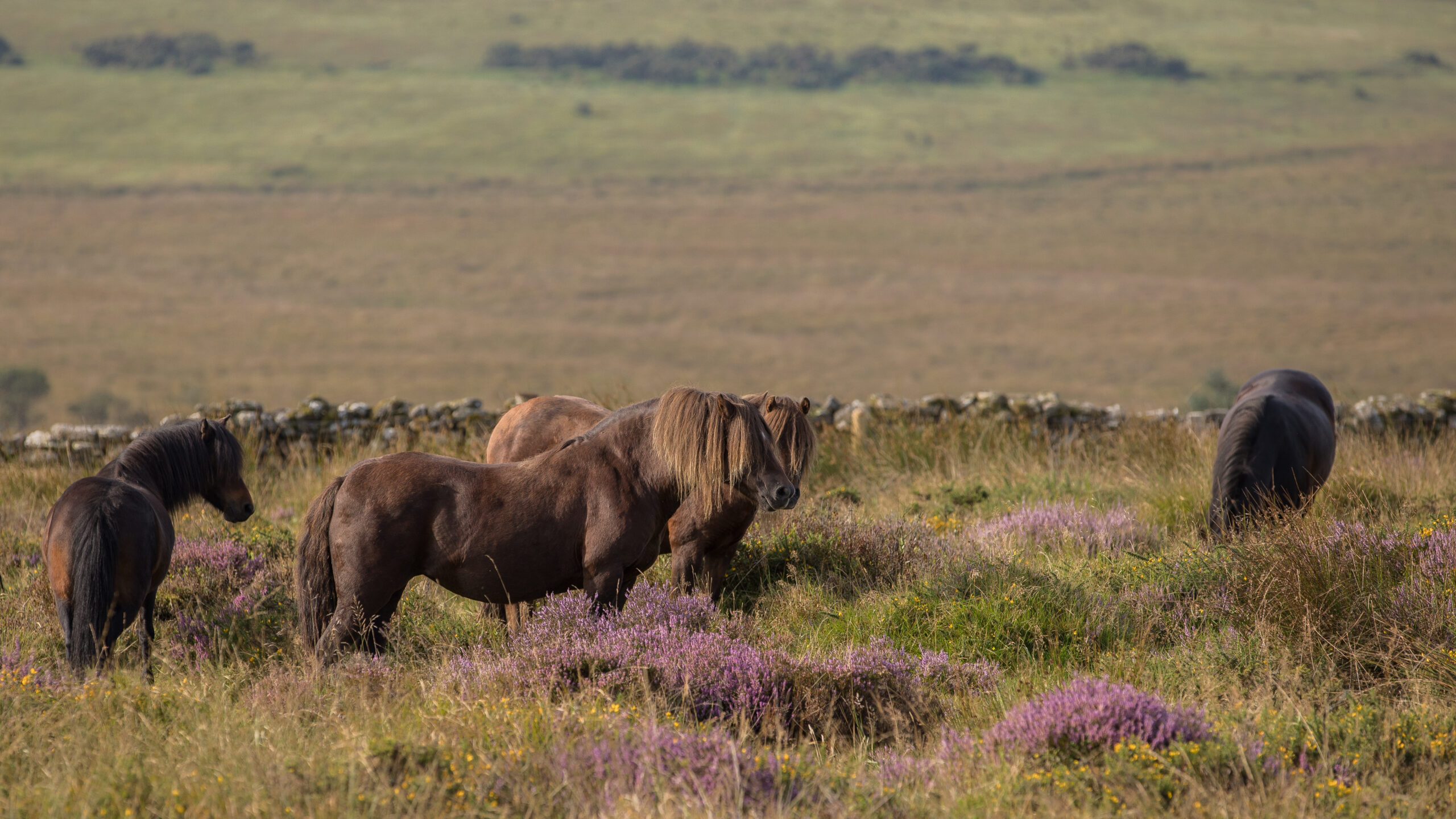
Statement from the Dartmoor Pony Heritage Trust on grazing agreements, stocking levels and the future of Dartmoor Heritage Ponies
Our commitment to Dartmoor Heritage Ponies
The Dartmoor Pony Heritage Trust (DPHT) is an independent conservation charity dedicated to preserving and protecting the traditional, true-to-type Dartmoor Heritage Pony. In light of recent public discussion about Environmental Land Management (ELM) agreements, stocking levels on Dartmoor and the future of the moor’s ponies, we believe it is important to explain our position, our role and our ongoing commitment to safeguarding these indigenous animals.
Who we are and what we do
The DPHT is an independent conservation charity founded in 2005 to preserve and protect the traditional, true‑to‑type Dartmoor Heritage Pony . We operate entirely separately from the Dartmoor Hill Pony Association and are not involved in campaigns or petitions relating to their work.
Our core purpose is to ensure that these specific native ponies remain a viable, valued, and permanent part of Dartmoor’s landscape. We do this by providing direct financial support, practical herd‑management assistance, and market pathways for keepers and breeders across the moor.
Ecological Importance of the Native Dartmoor Pony
Scientific research – including multi‑year studies conducted with the University of Plymouth – has repeatedly demonstrated that traditional Dartmoor ponies are exceptional conservation grazers. Their ancient genetics and hardiness allow them to thrive year‑round on the moor, selectively grazing dominant vegetation such as purple moor grass (Molinia) and crushing coarse gorse. These behaviours create biodiversity benefits that cattle and sheep cannot replicate.
Our position on ELM agreements and stocking levels
The DPHT has consistently advocated that indigenous Heritage Ponies within agri‑environment schemes. Under the current ELM “A–E” structure, ponies are grouped into the same livestock calculation as cattle, creating unintended pressures on pony numbers and on the viability of maintaining traditional herds.
We support the Independent Review of Protected Site Management on Dartmoor, which recommends that cattle and ponies be categorised separately.
Regarding stocking levels, the recent High Court ruling confirmed that responsibility for regulating the carrying capacity of the commons lies with the Dartmoor Commoners’ Council (DCC). We support a transparent, evidence‑based approach led by the DCC, ensuring decisions are grounded in ecological data rather than speculation.
Natural England has not proposed a blanket cull of ponies across Dartmoor. They have recommended reduced stocking rates on some commons; it remains the responsibility of each keeper to decide how they manage their herds within those limits.
Welfare, herd management, and avoiding culls
The DPHT does not engage in alarmist language around “culls.” Historically, welfare crises and indiscriminate private culls occurred only when ponies lost their economic or environmental value, or when unmanaged breeding produced unmarketable foals. The solution is not reactive culling, but proactive, responsible herd management.
The DPHT actively prevents welfare issues by:
- Providing direct grants — supporting keepers and breeders to maintain high‑quality Heritage and pedigree herds.
- Supporting active herd management — including stallion control, passporting, microchipping, and preventing unplanned breeding.
- Creating viable markets — training and preparing youngstock for conservation grazing and domestic riding homes, ensuring every foal born into recognised herds has value.
Our goal is to ensure that no pony becomes economically or environmentally redundant, thereby removing the conditions that historically led to welfare problems.
Understanding the three types of ponies on Dartmoor
For clarity, Dartmoor’s ponies fall into three categories:
- Dartmoor Ponies — fully registered pedigree ponies with traceable lineage and DPS green passports.
- Dartmoor Heritage Ponies — DPS‑inspected true‑to‑type ponies with purple passports, forming the core of the DPHT’s conservation focus.
- Dartmoor Hill Ponies — semi‑feral ponies with PET ID passports and no breed standard; these passports cannot be converted to DPS passports.
The DPHT supports keepers and breeders across Dartmoor, many of whom manage mixed herds containing several of these pony types.
Our ongoing commitment
We remain in close, constructive dialogue with the Dartmoor Commoners’ Council, the Dartmoor Pony Society, and Natural England. Our shared aim is to secure a stable, non‑political, evidence‑based framework that protects Dartmoor’s landscape while ensuring the long‑term survival of the traditional Dartmoor Heritage Pony.
The DPHT will continue to support the keepers, breeders, and—above all—the ponies that define Dartmoor’s cultural and ecological identity.